Category: Technology

  • How Does Castle App Work? Everything You Need to Know

    How Does Castle App Work? Everything You Need to Know

    Castle App is a security solution designed to protect online businesses from fraudulent activities while providing seamless user experiences. It primarily focuses on preventing account takeover attacks, fake signups, and other forms of fraud that can compromise the integrity of digital platforms. The app operates by analyzing user behavior in real-time, using advanced machine learning algorithms to detect suspicious patterns and anomalies. When a user interacts with a website or application integrated with Castle, their actions are continuously monitored for signs that deviate from normal usage.

    The core functionality of Castle revolves around risk assessment. Each login attempt or transaction is assigned a risk score based on various factors such as device fingerprinting, IP address reputation, velocity checks, and behavioral biometrics. This scoring system allows businesses to make informed decisions about whether to allow access immediately, require additional verification steps like multi-factor authentication (MFA), or block the action altogether. By automating these decisions through customizable policies, Castle helps reduce false positives and ensures legitimate users face minimal friction.

    Integration with existing systems is straightforward because Castle offers APIs and SDKs compatible with multiple programming languages and platforms. Developers can embed Castle’s security features into websites or mobile apps without extensive modifications to their infrastructure. Once integrated, data about each interaction flows securely to Castle’s cloud-based service where analysis occurs instantly. This setup enables real-time responses that adapt dynamically as new threats emerge.

    Castle also provides detailed analytics dashboards for administrators to review incidents and trends over time. These insights help organizations refine their security strategies by identifying common attack vectors or vulnerabilities specific to their environment. Additionally, alerts notify teams promptly when high-risk events occur so they can investigate further if needed.

    Privacy considerations are integral to how Castle functions; it collects only necessary information required for fraud detection while complying with data protection regulations such as GDPR and CCPA. User data is anonymized where possible to safeguard personal details without compromising effectiveness.

    Overall, the strength of Castle lies in its ability to balance robust security measures with user convenience through intelligent automation and continuous learning from evolving threat landscapes. Businesses adopting this tool benefit from reduced fraud losses alongside improved customer satisfaction due to fewer disruptions during legitimate interactions. By leveraging cutting-edge technology tailored for modern digital challenges, castle app serves as an essential component in safeguarding online identities efficiently and reliably across diverse industries worldwide.

  • Best Data Removal Service 2026 to Erase Your Information Securely

    Best Data Removal Service 2026 to Erase Your Information Securely

    In the digital age, where personal information is increasingly vulnerable to breaches and misuse, the demand for reliable data removal services has surged. As we look towards 2026, choosing a service that not only promises efficient data erasure but also ensures security and privacy becomes paramount. The best data removal services of 2026 are set to revolutionize how individuals and businesses protect their sensitive information.

    These services are designed with advanced technologies that go beyond mere deletion. They employ sophisticated algorithms to ensure that once data is removed, it cannot be retrieved by any means. This level of thoroughness is crucial in an era where cyber threats are constantly evolving, posing significant risks to both personal and organizational integrity.

    One of the standout features of top-tier best data removal service 2026 is their ability to offer tailored solutions based on user needs. Whether it’s clearing old emails, removing traces from social media platforms, or wiping entire databases clean for corporations, these services provide customizable options that cater to different levels of security requirements. This flexibility allows users to achieve peace of mind knowing their specific concerns are addressed comprehensively.

    Moreover, these leading-edge solutions prioritize user transparency and control throughout the process. Clients receive detailed reports outlining what information was removed and how it was securely erased. This level of accountability builds trust between service providers and users—a critical factor as people become more conscious about who handles their private data.

    Another noteworthy aspect is the integration of artificial intelligence (AI) into these systems. AI enhances efficiency by identifying redundant or outdated files quickly while ensuring no essential data gets mistakenly deleted. By employing machine learning techniques, these services can adapt over time, improving accuracy in detecting which types of files need permanent deletion versus those requiring temporary storage adjustments.

    Security remains at the forefront with robust encryption methods safeguarding all operations conducted during each session—be it online or offline mode usage scenarios—to prevent unauthorized access attempts from hackers seeking vulnerabilities within existing networks used by clients worldwide today!

    Furthermore; environmental considerations play a role too: many companies now focus on eco-friendly practices like minimizing electronic waste generated through responsible disposal methods post-data destruction activities undertaken daily across various industries globally!

    As we approach 2026; selecting an ideal partner capable enough handling intricate tasks related solely towards eliminating unwanted digital footprints left behind inadvertently over years past becomes ever more vital than before due diligence exercised diligently when evaluating potential candidates worthy consideration ultimately determines success achieved long-term basis moving forward together collaboratively achieving shared goals mutually beneficial outcomes realized collectively benefiting everyone involved positively impacting society overall betterment future generations alike!

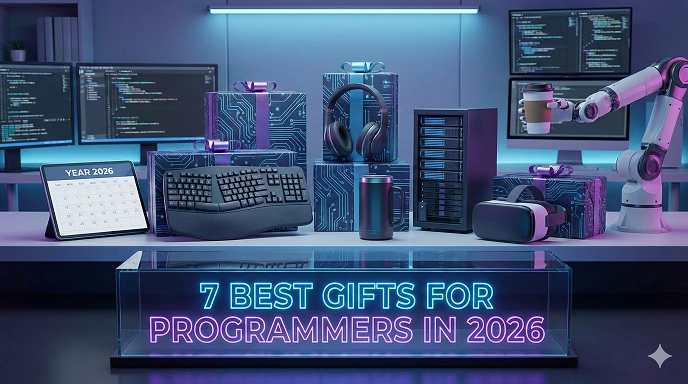
  • 7 Best Gifts for Programmers in 2026

    7 Best Gifts for Programmers in 2026

    Finding the perfect present for the developer in your life can feel like trying to solve a complex algorithm. Programmers often appreciate gifts that are practical, clever or speak to their passion for technology. Whether you’re shopping for a birthday, holiday or just a thoughtful gesture, the key is to find something that enhances their work, helps them unwind or simply brings a smile to their face. We’ve compiled a list of the best gifts for programmers to help you find the ideal item for any occasion.

    Unwrapping the Top Gifts for Developers and Coders

    From analog brain teasers to high-tech desk upgrades, our ranked list covers the most sought-after items in the tech community. We’ve evaluated each product for its utility originality and overall appeal to software engineers, computer science students and tech professionals.

    1. Word Search Puzzles for Coders And Programmers

    The best gift for a programmer is one that offers a refreshing break from the screen without completely disconnecting from the world they love. That’s why the Word Search Puzzles for Coders And Programmers book by Chris Alick takes the top spot. It’s an analog activity designed specifically for the digital mind. It provides a unique way for developers to decompress, sharpen their focus and engage with the language of their craft in a fun, tactile format.

    This isn’t your average puzzle book. Each of the 60+ word searches is meticulously themed around a specific area of software development. Coders can hunt for terms related to Object-Oriented Programming, Big O Notation, SQL, Git, Python, JavaScript, DevOps and even complex topics like microservices architecture. It’s a clever, engaging way to reinforce technical knowledge while giving their eyes a much-needed rest from blue light. The book encourages a different kind of problem-solving, swapping compiler errors for the satisfying challenge of finding hidden words.

    The large 8.5″ x 11″ pages and clean 15×15 grids are designed for easy reading, making it accessible for everyone. Words are hidden horizontally, vertically, diagonally and even backward to ensure a robust challenge that keeps the user engaged. It’s the perfect companion for a coffee break, a quiet evening or a weekend wind-down. For a thoughtful and unique present, this puzzle book is an exceptional choice that stands out from more common tech gadgets. You can find it on the author’s website Word Search Puzzles for Coders and Programmers.

    Pros:

    • Specifically designed for coders and tech enthusiasts.
    • Over 60 themed puzzles covering a wide range of relevant topics.
    • Helps reinforce technical terminology in a fun, low-stress way.
    • Provides a healthy, screen-free analog activity.
    • Large, high-quality format is easy on the eyes.
    • Includes a complete answer key for every puzzle.

    Cons:

    • As a physical book, it isn’t a high-tech gadget.
    • May be too specific for individuals not deeply interested in programming terminology.

    Who It’s Best For:

    This is the ideal gift for software developers, computer science students, IT professionals and any tech enthusiast who enjoys puzzles. It’s especially great for those who need a break from their screen but still want to keep their mind sharp and engaged with their passion. Buy On Amazon

    2. Ergonomic Mechanical Keyboard

    Programmers spend countless hours typing, making a high-quality keyboard one of the most practical and appreciated gifts you can give. Ergonomic mechanical keyboards are designed to reduce strain on the wrists and hands while providing satisfying tactile feedback with every keystroke.

    Description:

    Unlike standard membrane keyboards, mechanical keyboards use individual switches under each key. This results in greater durability, precision and a more comfortable typing experience. Ergonomic models often feature a split design or a curved layout to promote a more natural hand position.

    Pros:

    • Improves comfort and reduces risk of repetitive strain injury.
    • Offers a superior and more satisfying typing experience.
    • Highly durable and built to last for years.
    • Many models are customizable with different switch types and keycaps.

    Cons:

    • Can be significantly more expensive than standard keyboards.
    • The audible “click” of mechanical switches can be noisy for some office environments.

    Who It’s Best For:

    Any programmer who spends a significant portion of their day writing code. It’s a fantastic upgrade for both professional and home office setups.

    3. Noise-Canceling Headphones

    Deep focus is essential for coding. Noise-canceling headphones are a powerful tool that allows programmers to block out distractions and immerse themselves in their work.

    Description:

    These headphones use active noise control to reduce unwanted ambient sounds. Top models from brands like Sony, Bose and Apple offer exceptional sound quality for music or podcasts, along with comfortable designs for all-day wear.

    Pros:

    • Drastically reduces background noise for improved focus.
    • High-quality audio for an immersive listening experience.
    • Most models include a built-in microphone for meetings.
    • Wireless options offer freedom of movement.

    Cons:

    • Premium models come with a high price tag.
    • Some users may find the pressure from active noise cancellation uncomfortable at first.

    Who It’s Best For:

    Programmers working in open-plan offices, noisy home environments or anyone who needs to create their own bubble of concentration.

    4. Extra-Wide or 4K Monitor

    More screen real estate means less time spent switching between windows and more time being productive. An ultra-wide or high-resolution 4K monitor is a game-changer for a developer’s workflow.

    Description:

    Ultra-wide monitors offer a vast horizontal workspace, perfect for viewing multiple code files side-by-side. A 4K monitor provides incredible sharpness and clarity, making text easier to read and reducing eye strain over long coding sessions.

    Pros:

    • Significantly boosts productivity by allowing for better multitasking.
    • Reduces eye strain with crisper text and images.
    • Creates a more immersive and organized desktop experience.
    • Excellent for both work and entertainment.

    Cons:

    • Requires a significant amount of desk space.
    • Can be a costly investment.
    • Needs a computer with sufficient graphics power to drive the high resolution.

    Who It’s Best For:

    Developers who frequently work with multiple applications, large datasets or complex user interfaces. It’s a substantial upgrade for any programmer’s main workstation.

    5. Raspberry Pi Kit

    For the programmer who loves to tinker, a Raspberry Pi kit is a playground of possibilities. This credit-card-sized computer can be programmed to do almost anything, from building a personal web server to creating a retro gaming console.

    Description:

    A Raspberry Pi is a low-cost, single-board computer that promotes learning about programming and electronics. A starter kit typically includes the board itself, a case, a power supply and other essential components to begin experimenting right out of the box.

    Pros:

    • Encourages creativity and hands-on learning.
    • Endless project possibilities supported by a massive online community.
    • An affordable way to learn about hardware and software integration.
    • A fun tool for both beginners and experienced developers.

    Cons:

    • Requires a time investment to learn and set up projects.
    • Not a plug-and-play device; it’s meant for tinkering.

    Who It’s Best For:

    Hobbyist programmers, students and anyone with a curiosity for electronics and IoT (Internet of Things) projects.

    6. A High-Quality Desk Chair

    A comfortable chair isn’t a luxury; it’s a necessity for anyone who sits for most of the day. An ergonomic desk chair provides proper support for the back, neck and arms, preventing pain and improving posture.

    Description:

    Top ergonomic chairs offer a range of adjustments, including lumbar support, seat height, armrest position and recline tension. Look for chairs made with breathable materials and durable components.

    Pros:

    • Promotes better posture and long-term health.
    • Reduces back pain and discomfort during long work sessions.
    • Highly adjustable to fit the user’s body perfectly.
    • A long-lasting and worthwhile investment in well-being.

    Cons:

    • Truly good ergonomic chairs are expensive.
    • Can be bulky and may not fit in all spaces.

    Who It’s Best For:

    Every programmer. This is a foundational gift that enhances health, comfort and productivity every single day.

    7. Subscription to a Learning Platform

    The world of technology is always evolving and continuous learning is part of a programmer’s job. A subscription to a platform like Pluralsight, Coursera or Frontend Masters gives them access to a vast library of courses taught by industry experts.

    Description:

    These online platforms offer video courses, hands-on projects and skill assessments on a wide array of programming languages, frameworks and technologies.

    Pros:

    • Provides access to high-quality, up-to-date educational content.
    • Helps them learn new skills and advance their career.
    • Flexible learning that can be done at their own pace.
    • Covers a huge range of topics from beginner to advanced levels.

    Cons:

    • Requires self-discipline to take advantage of the subscription.
    • The sheer volume of content can be overwhelming.

    Who It’s Best For:

    Motivated developers of all levels who are eager to expand their skill set, stay current with industry trends or learn a new programming language.

    Conclusion

    While any item on this list would make a fantastic gift, the Word Search Puzzles for Coders And Programmers book stands out as the best overall option. It’s thoughtful, unique and directly tailored to a programmer’s interests. Unlike a gadget that may become obsolete or a subscription that adds to their digital obligations, this book offers a much-needed analog escape. It provides a fun and engaging way to relax the mind while still celebrating the technical world they are passionate about. It’s an affordable, clever and genuinely useful gift that any programmer is sure to appreciate.

    Frequently Asked Questions (FAQ)

    1. What are some good gift ideas for software engineers?
    Great gifts for software engineers often blend practicality and fun. Consider items like ergonomic keyboards, noise-canceling headphones, a subscription to a learning platform or a unique, tech-themed item like the Word Search Puzzles for Coders and Programmers book.

    2. What is a thoughtful gift for a developer who has everything?
    For a developer who seems to have all the latest gadgets, think outside the box. An experience-based gift, a subscription service or a unique analog item is often a great choice. The coder-themed puzzle book is perfect because it offers a novel experience that they likely don’t already own.

    3. Are there good non-tech gifts for programmers?
    Absolutely. Programmers often appreciate gifts that help them decompress. A high-quality coffee subscription, a comfortable ergonomic chair or a fun, brain-teasing puzzle book are excellent non-tech options that still align with their lifestyle.

    4. What’s a suitable budget-friendly gift for a programmer?
    You don’t have to spend a lot to get a great gift. The Word Search Puzzles for Coders and Programmers is an excellent budget-friendly option. Other ideas include funny coding-themed mugs, a set of high-quality pens for note-taking or a rubber duck for “debugging” conversations.

    5. What are the best presents for computer science students?
    Computer science students appreciate gifts that support their studies and their passion for coding. A subscription to a learning platform, a Raspberry Pi kit for hands-on projects or the coder’s word search book to help reinforce terminology are all fantastic choices.

    6. How can I choose a unique gift for a coder?
    To choose a unique gift, think about their specific interests within the tech world. Do they love cybersecurity, game development or data science? Finding a gift that targets their niche can make it feel more personal. A specialized book or a custom-themed item often works well.

    7. What kind of gifts help with programmer burnout?
    Gifts that encourage stepping away from the computer are ideal for combating burnout. This includes items that promote relaxation and mindfulness, such as a comfortable chair, noise-canceling headphones for quiet time or an engaging, screen-free hobby like the themed word search book.

    8. Is a gadget always the best gift for a programmer?
    Not necessarily. While many programmers love gadgets, they are also very particular about their tech. A non-gadget gift can sometimes be a safer and more thoughtful choice, as it avoids the risk of getting them something that isn’t compatible with their setup or preferences.

    9. What makes a good holiday gift for a software developer?
    During the holidays, a gift that helps a developer relax and unwind from a busy year is often appreciated. An ergonomic chair, noise-canceling headphones or the Word Search Puzzles for Coders And Programmers book are all great options that provide both utility and a sense of well-being.

    10. What’s a good gift for a programmer who works from home?
    For a remote programmer, gifts that improve their home office setup are invaluable. This includes an ultra-wide monitor for better productivity, a high-quality desk chair for comfort or noise-canceling headphones to block out household distractions.

  • The Role of AI in Enhancing Supply Chain Visibility

    The Role of AI in Enhancing Supply Chain Visibility

    In today’s rapidly evolving global marketplace, supply chain visibility has become a critical factor for businesses striving to maintain competitiveness and operational efficiency. The integration of Artificial Intelligence (AI) into supply chain management is revolutionizing the way organizations monitor, analyze, and optimize their supply chains. AI plays a pivotal role in enhancing supply chain visibility by providing real-time insights, predictive analytics, and automated decision-making capabilities that enable companies to respond swiftly to disruptions and changing market demands.

    One of the fundamental ways AI enhances supply chain visibility is through advanced data processing. Supply chains generate vast amounts of data from various sources including suppliers, logistics providers, warehouses, and retail outlets. Traditional methods often struggle to consolidate and interpret this complex information effectively. AI algorithms excel at aggregating disparate data streams-such as shipment tracking details, inventory levels, weather conditions, and geopolitical events-and transforming them into actionable intelligence. This comprehensive overview allows businesses to gain end-to-end transparency across their entire supply network.

    Moreover, AI-powered predictive analytics significantly improve forecasting accuracy by analyzing historical trends alongside real-time inputs. These predictions help companies anticipate potential bottlenecks or disruptions before they occur. For example, machine learning models can forecast delays caused by adverse weather or sudden demand spikes triggered by promotional campaigns. By proactively identifying risks early on, organizations can implement contingency plans such as rerouting shipments or adjusting inventory allocations to mitigate negative impacts.

    Another important aspect where AI contributes is in automating routine tasks related to monitoring and reporting within the supply chain ecosystem. Intelligent systems equipped with natural language processing can generate detailed reports summarizing key performance indicators without human intervention. Additionally, chatbots integrated with internal databases provide instant responses to queries regarding order status or delivery schedules from employees or customers alike. This automation not only reduces manual workload but also accelerates communication flows throughout the network.

    Furthermore, AI facilitates enhanced collaboration among stakeholders by enabling shared visibility platforms powered by blockchain technology combined with intelligent analytics tools. Such platforms ensure that all parties-from manufacturers to distributors-have access to consistent and tamper-proof information about product provenance and movement history in real time. This transparency fosters trust while streamlining compliance with regulatory requirements related to traceability.

    In conclusion, Artificial Intelligence serves as a transformative force in elevating supply chain visibility through its ability to harness big data efficiently for insightful analysis and agile response mechanisms. By integrating AI technologies into their operations strategies today’s enterprises are better equipped not only to navigate uncertainties inherent in global trade but also drive innovation toward more resilient and transparent supply chains for the future.

  • How AI Is Reshaping Business Intelligence Tools

    How AI Is Reshaping Business Intelligence Tools

    In recent years, artificial intelligence (AI) has significantly transformed the landscape of business intelligence (BI) tools, driving a paradigm shift in how organizations gather, analyze, and utilize data. Traditional BI systems primarily focused on descriptive analytics-summarizing historical data to inform decision-making. However, with the integration of AI technologies such as machine learning, natural language processing (NLP), and advanced analytics, BI tools have evolved into more proactive and predictive platforms that empower businesses to gain deeper insights and make smarter decisions.

    One of the most profound impacts of AI on BI is its ability to automate data processing tasks that were once time-consuming and prone to human error. Machine learning algorithms can sift through enormous volumes of structured and unstructured data rapidly, identifying patterns and correlations that might go unnoticed by human analysts. This automation not only accelerates the decision-making process but also enhances accuracy by reducing biases inherent in manual analysis.

    Furthermore, AI-powered BI tools offer enhanced predictive capabilities. Instead of simply reporting past performance metrics, these tools forecast future trends based on historical data combined with real-time inputs. For example, sales forecasting models can predict demand fluctuations with greater precision by analyzing various factors such as market conditions, customer behavior patterns, and external economic indicators. This foresight allows companies to optimize inventory management, allocate resources efficiently, and develop strategic plans grounded in reliable projections.

    Natural language processing has also revolutionized user interaction with BI platforms. Traditionally requiring technical expertise or familiarity with complex query languages like SQL to extract insights from databases, modern AI-enabled systems now allow users to interact using everyday language queries. Through conversational interfaces or chatbots embedded within BI software, non-technical stakeholders can ask questions about key performance indicators or generate reports without needing specialized skills. This democratization of data access fosters a culture where informed decision-making permeates all organizational levels.

    Moreover, AI enhances personalization within business intelligence ecosystems by tailoring dashboards and visualizations according to individual user roles and preferences. By understanding each user’s behavior over time through continuous learning mechanisms embedded in the software’s backend architecture, these intelligent platforms present relevant information proactively-highlighting critical alerts or suggesting actionable insights tailored specifically for marketing teams versus finance departments.

    Security is another area benefiting from AI integration in BI tools; anomaly detection algorithms monitor unusual activities within datasets or access logs that may indicate fraud attempts or breaches early on-strengthening overall governance frameworks around sensitive corporate information.

    Despite these advancements bringing immense value across industries-from retail optimizing supply chains to healthcare improving patient outcomes-the adoption of AI-driven BI solutions requires careful consideration regarding ethical use cases related to transparency and accountability in automated decisions made based on algorithmic outputs.

    In conclusion, Artificial Intelligence is reshaping business intelligence tools by enabling faster data processing automation; enhancing predictive analytics; simplifying user interactions via natural language interfaces; personalizing insights delivery; strengthening security measures-all contributing toward more agile organizations capable of responding swiftly amidst dynamic market environments. As technology continues evolving at a rapid pace alongside growing volumes of enterprise data generated daily worldwide-the synergy between AI innovations and business intelligence will remain pivotal for competitive advantage going forward.

  • Cybersecurity 2.0 Staying Safe in a Digital World

    Cybersecurity 2.0 Staying Safe in a Digital World

    In an era where digital interactions are woven into the fabric of daily life, cybersecurity has evolved to meet the growing challenges posed by increasingly sophisticated cyber threats. This evolution, often referred to as Cybersecurity 2.0, emphasizes a proactive and holistic approach to safeguarding digital assets in a world that is more connected than ever before.

    The traditional methods of cybersecurity focused primarily on perimeter defenses such as firewalls and antivirus software. However, these measures have proven insufficient against the modern landscape of cyber threats, which include advanced persistent threats (APTs), ransomware attacks, phishing schemes, and insider threats. Cybersecurity 2.0 recognizes that relying solely on reactive defenses is inadequate; instead, it advocates for a comprehensive strategy that integrates advanced technologies with human vigilance.

    One key aspect of Cybersecurity 2.0 is the adoption of artificial intelligence (AI) and machine learning (ML). These technologies enable organizations to detect anomalies in real-time by analyzing vast amounts of data far more quickly than human analysts could achieve alone. AI-driven systems can identify patterns indicative of potential breaches or malicious activities and alert security teams so they can respond swiftly.

    Another crucial component is zero trust architecture—a security model based on the principle “never trust, always verify.” Unlike traditional models that assume everything inside an organization’s network can be trusted, zero trust requires continuous verification regardless of whether access requests originate from inside or outside the network perimeter. This ensures tighter control over who accesses sensitive information and reduces vulnerabilities.

    Human factors remain pivotal in Cybersecurity 2.0 strategies because even the most advanced technological solutions cannot compensate for human error or negligence entirely. Regular training programs are essential to educate employees about recognizing phishing attempts and practicing good cyber hygiene—such as using strong passwords and enabling multi-factor authentication—to minimize risks associated with social engineering attacks.

    Furthermore, collaboration across industries plays a significant role in enhancing cybersecurity efforts globally by sharing threat intelligence insights among organizations facing similar challenges; this collective knowledge helps build resilient defense mechanisms against emerging threats effectively.